

We are excited to announce new Cilium and Helm add-ons, coming to MicroK8s! These add-ons add even more power to your Kubernetes environment built on MicroK8s. The Cilium CNI plugin brings enhanced networking features, including Kubernetes NetworkPolicy support, to MicroK8s. You’ll also get direct CLI access to Cilium within MicroK8s usin

Overall, most Linux distributions offer sane, reasonable defaults that balance security and functionality quite well. However, most of the security mechanisms are transparent, running in the background, and you still might require some additional, practical software to bolster your security array. Back in July, we talked about handy produ

When users of your application range from high school students to expert data scientists, it’s often wise to avoid any assumptions about their system configurations. The Jupyter Notebook is popular with a diverse user base, enabling the creation and sharing of documents containing live code, visualisations, and narrative text. The app use

A well configured linter can catch common errors before code is even run or compiled. ROS 2 makes it easy to add linters of your choice and make them part of your package’s testing pipeline. We’ll step through the process, from start to finish, of adding a linter to ament so it can be used

How AI Is Changing The Game For Recruiting – In this use case spotlight, we review how machine learning toolkits like Kubeflow and AI are changing the recruiting industry. Talent acquisition is expensive, and getting it wrong is more expensive. AI can helping improve talent acquisition efficiency and effectiveness. From finding the right

This iteration was the Web & design team’s first iteration of the second half of our roadmap cycle, after returning from the mid-cycle roadmap sprint in Toronto 2 weeks ago. Priorities have moved around a bit since before the cycle, and we made a good start on the new priorities for the next 3 months.

Replicating Particle Collisions at CERN with Kubeflow – this post is interesting for a number of reasons. First, it shows how Kubeflow delivers on the promise of portability and why that matters to CERN. Second, it reiterates that using Kubeflow adds negligible performance overhead as compared to other methods for training. Finally, the p
One of the most common complaints from developers moving into large Python codebases is the difficulty in figuring out type information, and the ease by which type mismatch errors can appear at runtime. Python 3.5 added support for a type annotation system, described in PEP 484. Python 3.6+ expands this with individual variable annotation

Newsletter signup

Depending on the audience, the discussion of software packaging elicits very different responses. Users generally don’t care how software is packaged, so long as it works. Developers typically want software packaging as a task to not burden them and just magically happen. Snaps aren’t magic, but aim to achieve both ease of maintenance and

Remember the one-size-fits-all approach to cloud computing? That was five years ago. Today, multi-cloud architectures that use two, three, or more providers, across a mix of public and private platforms, are quickly becoming the preferred strategy at most companies. Despite the momentum, pockets of hesitation remain. Some sceptics are und
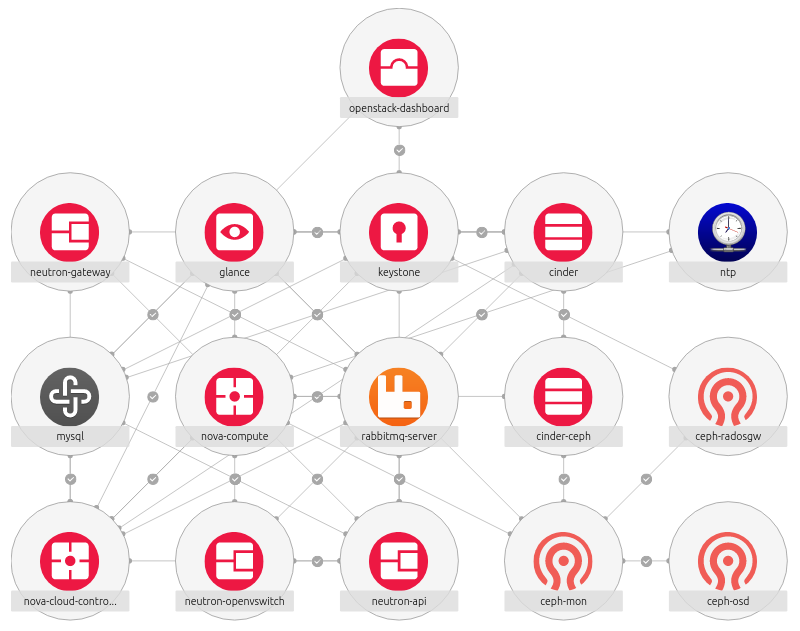
Canonical is proud to announce the availability of OpenStack Charms 19.07. This new release introduces a range of exciting features and several improvements which enhance Charmed OpenStack across various areas. Let’s talk about a few notable ones. Percona cluster cold start The percona-cluster charm now contains a new logic and actions to
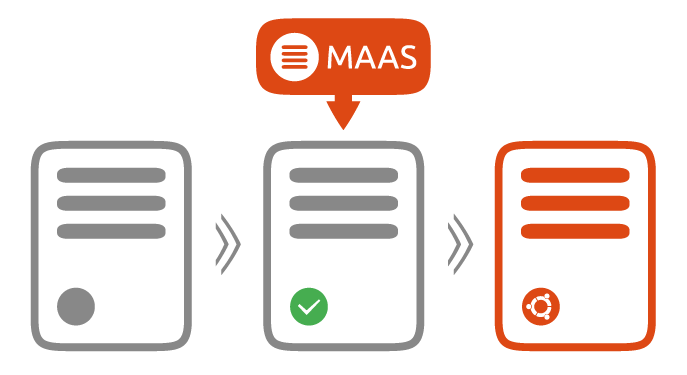
MAAS has supported provisioning ESXi starting from MAAS 2.5. However, MAAS 2.6 has expanded its support and provides new features that significantly improves the provisioning experience. What is supported? The support MAAS provides for provisioning an operating system varies depending on the operating system in use. Even though MAAS tries

Julia is an open source, high-level, general-purpose, dynamic programming language designed for numerical analysis and computational science, launched in 2012. It solves the “two language” problem: developers can use Julia for both computational and interactive work, instead of needing to work with two different languages which can often

Kubeflow — a machine learning toolkit for Kubernetes – An introduction to Kubeflow from the perspective of a data scientist. This article quickly runs through some key components – Notebooks, Model Training, Fairing, Hyperparameter Tuning (Katib), Pipelines, Experiments, and Model Serving. If you are looking for a quick overview, give thi
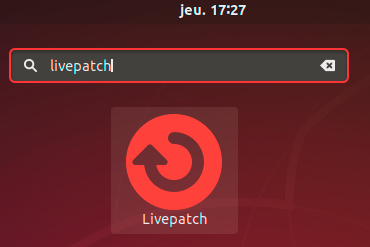
Ubuntu 18.04.3 LTS has just been released. For the Desktop, newer stable versions of GNOME components have been included, as well as a new feature – Livepatch desktop integration. As usual with LTS point releases, the main changes are a refreshed hardware enablement stack (newer versions of the kernel, xorg & drivers) and a number

Slow applications are never fun. But not knowing why an application is not behaving correctly can be even more frustrating. A well-designed system that can diagnose performance or startup issues and inform the user about the problem goes a long way toward mitigating the frustration, and may even help resolve the root cause altogether. Bac
Ubuntu tech blog
Deep dives for developers
Visit the Ubuntu Tech Blog for deep dives into product features, step-by-step tutorials, and the latest updates from Canonical's engineering teams.