

A new machine list, and a new framework In MAAS 2.8, we’re shipping a new machine list, built from the ground up in React and Redux. We’ve also implemented a few new features: persisting UI state for grouping, new grouping options, bookmarkable urls with filter and search parameters, and many performance improvements. In my last

.NET is an open source software framework for building cross-platform applications on Linux, Windows, and macOS. Ubuntu on WSL allows you to build and test applications for Ubuntu and Windows simultaneously. What happens when we mix these together? This blog will demonstrate how to install a .NET development stack on WSL, build a simple O
Windows and macOS developers can now use MicroK8s natively! Use kubectl at the Windows or Mac command line to interact with MicroK8s locally just as you would on Linux. Clean integration into the desktop means better workflows to dev, build and test your containerised apps. MicroK8s is a conformant upstream Kubernetes, packaged for simpli
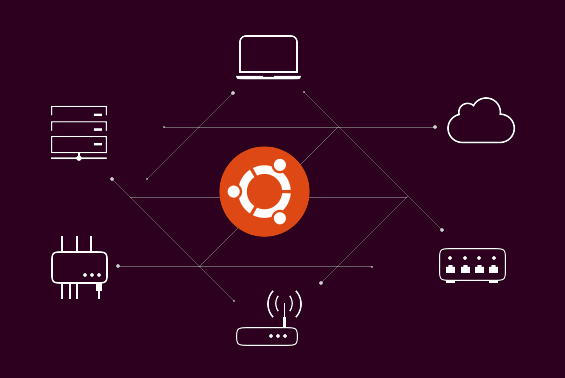
With over 41 billion IoT devices expected to be active by 2027 — that’s at least 5 devices for every person on the planet — edge computing has emerged as a tenable solution to prevent the impending snowballing of network traffic. Allow me to lift the veil on this buzzword and explain why it’s been

Using open source software significantly reduces the total cost of ownership (TOC) of your IT infrastructure. Over the last few years, we’ve seen more and more companies gradually moving to open source. Our latest research conducted through The International Data Corporation (IDC) shows that 70% of businesses are adopting open source soft
Kubernetes has been successful for a number of reasons, not the least of which is that it takes care of things that application developers may not want to bother with – such as, for example, networking. Multus is a feature that can be used on top of Kubernetes to enable complex networking use cases. Kubernetes

In the past, we have discussed various ways on how to debug and troubleshoot potential issues during snap development. The ability to quickly iterate, resolve build process hurdles and publish the application in a timely manner is essential to a robust, positive development experience. Today, we would like to outline a few basic tips and

Today Microsoft announced the general availability of Windows Subsystem for Linux 2 in the Windows 10 May 2020 update. WSL 2 is based on a new architecture that provides full Linux binary application compatibility and improved performance. WSL 2 is powered by a real Linux kernel in a lightweight virtual machine that boots in under

Newsletter signup

Kubeflow in 3 minutes Google launches Kubeflow 101, a series of short videos to demystify Kubeflow. Intro to Kubeflow. Watch an overview of Kubeflow in the first episode: Intro to Kubeflow pipelines In the second episode of Kubeflow 101, watch an introduction to Kubeflow pipelines, and the presentation of a new hosted version of Kubeflow

Hybrid cloud and multi-cloud are two exclusive terms that are often confused. While the hybrid cloud represents a model for extending private cloud infrastructure with one of the existing public clouds, a multi-cloud refers to an environment where multiple clouds are used at the same time, regardless of their type. Thus, while the hybrid

The web team here at Canonical run two-week iterations. Here are some of the highlights of our completed work from this iteration. Meet the team My name is Bartek (also known as bartaz around the interwebz). I live in Poznań in Poland and I’m a web developer. I’ve been a software developer for over 10
Deep Learning is set to thrive Data science has exploded as a practice in the past decade and has become an undisputed driver of innovation. The forcing factors behind the rising interest in Machine Learning, a not so new concept, have consolidated and created an unparalleled capacity for Deep Learning, a subset of Artificial Neural
Ubuntu has supported ZFS as an option for some time. In 19.10, we introduced experimental support on the desktop. As explained, having a ZFS on root option on our desktop was only a first step in what we want to achieve by adopting this combined file system and logical volume manager. I strongly suggest you read
Kubernetes has enjoyed an unparalleled 5-year growth that has revolutionised the IT industry. It has become a key factor for organisations to be successful and have a competitive advantage. In order to optimise these benefits, organisations look for new ways to reduce Kubernetes complexity and get interoperability with other systems. Fast

This week, Canonical announced the integration of Charmed Kubernetes with Microsoft Azure Arc. This integration provides businesses with a centralised place to manage their Kubernetes clusters and deploy their applications at scale, from cloud to the edge. The Azure Arc dashboard enables management and governance of any Kubernetes, acros

Watch on demand With the benefits of Kubernetes now well established in the containerisation space, its adoption continues to exponentially increase. However, as developers and enterprises alike turn to Kubernetes for more and more types of use cases, available Kubernetes solutions often fail to meet their exact needs. Canonical’s extensi
Ubuntu tech blog
Deep dives for developers
Visit the Ubuntu Tech Blog for deep dives into product features, step-by-step tutorials, and the latest updates from Canonical's engineering teams.