

This was a fairly busy two weeks for the Web & design team at Canonical. Here are some of the highlights of our completed work. Web squad Web is the squad that develop and maintain most of the brochure websites across the Canonical. Here are a few highlights of completed work. We also moved several

This article is the first in a series of machine learning articles focusing on model serving. I assume you’re reading this article because you’re excited about machine learning and quite possibly Kubeflow as well. You might have done some model training and are now trying to understand how to serve those models in production. There
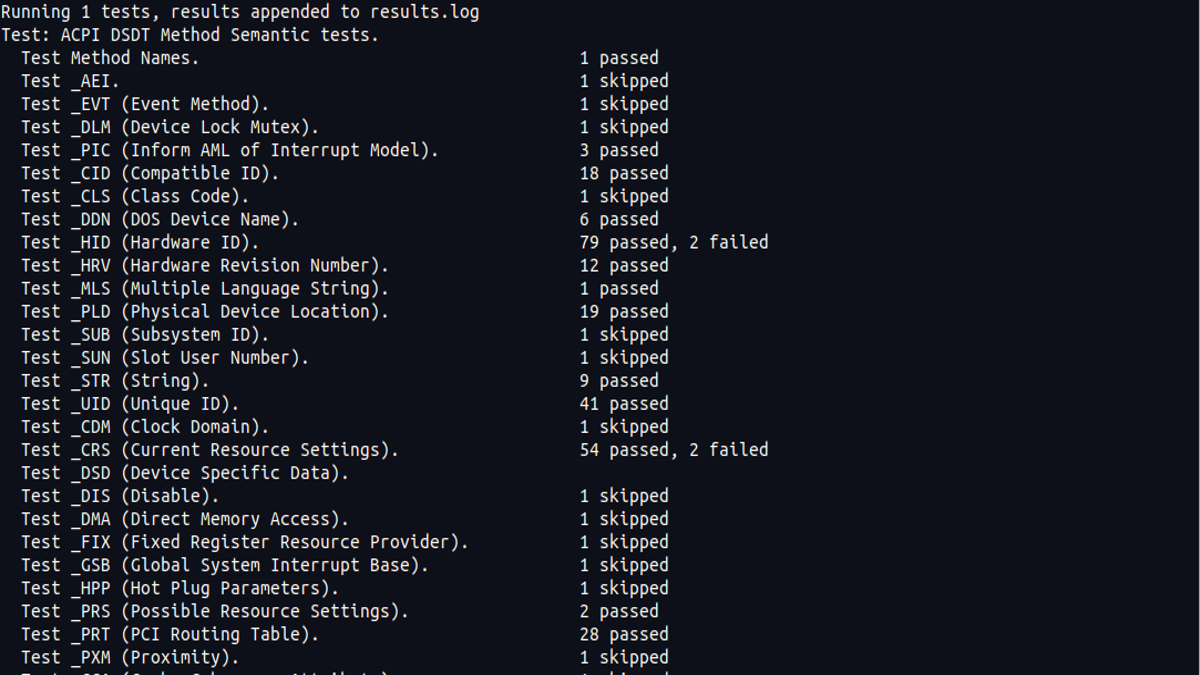
I often need to implement tests for new ACPI tables before they become available on real hardware. Fortunately, FWTS provides a framework to read ACPI tables’ binary. The below technique is especially convenient for ACPI firmware and OS kernel developers. It provides a simple approach to verifying ACPI tables without compiling firmware an

Issues have been identified in the way the Linux kernel’s TCP implementation processes Selective Acknowledgement (SACK) options and handles low Maximum Segment Size (MSS) values. These TCP SACK Panic vulnerabilities could expose servers to a denial of service attack, so it is crucial to have systems patched. Updated versions of the Linux

Recently, we published several blog posts, aimed at helping developers enjoy a smoother, faster, more streamlined experience creating snaps. We discussed the tools and tricks you can employ in snapcraft to accelerate the speed at which you iterate on your builds. We want to continue the work presented in the Make your snap development fas

Private cloud, public cloud, hybrid cloud, multi-cloud… the variety of locations, platforms and physical substrate you can start a cloud instance on is vast. Yet once you have selected an operating system which best supports your application stack, you should be able to use that operating system as an abstraction layer between different c

Over the past several months, we have shared with you several articles and tutorials showing how to accelerate application development so that a typically demanding, time-consuming process becomes an easier, faster and more fun one. Today, we’d like to introduce some additional tips and tricks. Namely, we want to talk about elegant ways y
Hello Ubuntu Server The purpose of this communication is to provide a status update and highlights for any interesting subjects from the Ubuntu Server Team. If you would like to reach the server team, you can find us at the #ubuntu-server channel on Freenode. Alternatively, you can sign up and use the Ubuntu Server Team

Newsletter signup

Mobile operators face a range of challenges today from saturation, competition and regulation – all of which are having a negative impact on revenues. The introduction of 5G offers new customer segments and services to offset this decline. However, unlike the introduction of 4G which was dominated by consumer benefits, 5G is expected to b

This was a fairly busy two weeks for the Web & design team at Canonical. Here are some of the highlights of our completed work. Web squad Web is the squad that develop and maintain most of the brochure websites across the Canonical. Getting started with AI webinar We build a page to promote the
Thanks to the huge amount of feedback this weekend from gamers, Ubuntu Studio, and the WINE community, we will change our plan and build selected 32-bit i386 packages for Ubuntu 19.10 and 20.04 LTS. We will put in place a community process to determine which 32-bit packages are needed to support legacy software, and can

Disclosure: read the post until the end, a surprise awaits you! Moving from ROS 1 to ROS 2 can be a little overwhelming.It is a lot of (new) concepts, tools and a large codebase to get familiar with. And just like many of you, I am getting started with ROS 2. One of the central
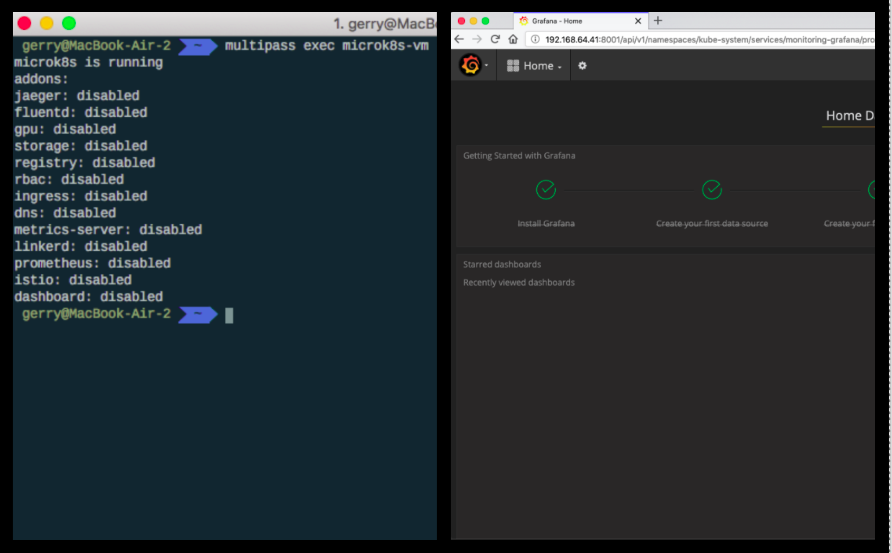
UPDATED in July 2020 with the latest instruction set. Are you looking for a Kubernetes solution to run on your Mac? MicroK8s is a lightweight, pure upstream distribution of Kubernetes developed by Canonical. It’s a compact Linux snap that installs a single-node Kubernetes cluster alongside carefully selected add-ons on Linux, Windows and

We have just released Vanilla Framework 2.0, Canonical’s SCSS styling framework, and – despite our best efforts to minimise the impact – the new features come with changes that will not be automatically backwards compatible with sites built using previous versions of the framework. To make the transition to v2.0 easier, we have compiled a

In Linux, testing software is both easy and difficult at the same time. While the repository channels offer great availability to software, you can typically only install a single instance of an application. If you want to test multiple instances, you will most likely need to configure the remainder yourself. With snaps, this is a

Canonical announces full enterprise support for Kubernetes 1.15 using kubeadm deployments, its Charmed Kubernetes, and MicroK8s; the popular single-node deployment of Kubernetes. The MicroK8s community continues to grow and contribute enhancements, with Knative and RBAC support now available through the simple microk8s.enable command. Kna
Ubuntu tech blog
Deep dives for developers
Visit the Ubuntu Tech Blog for deep dives into product features, step-by-step tutorials, and the latest updates from Canonical's engineering teams.