
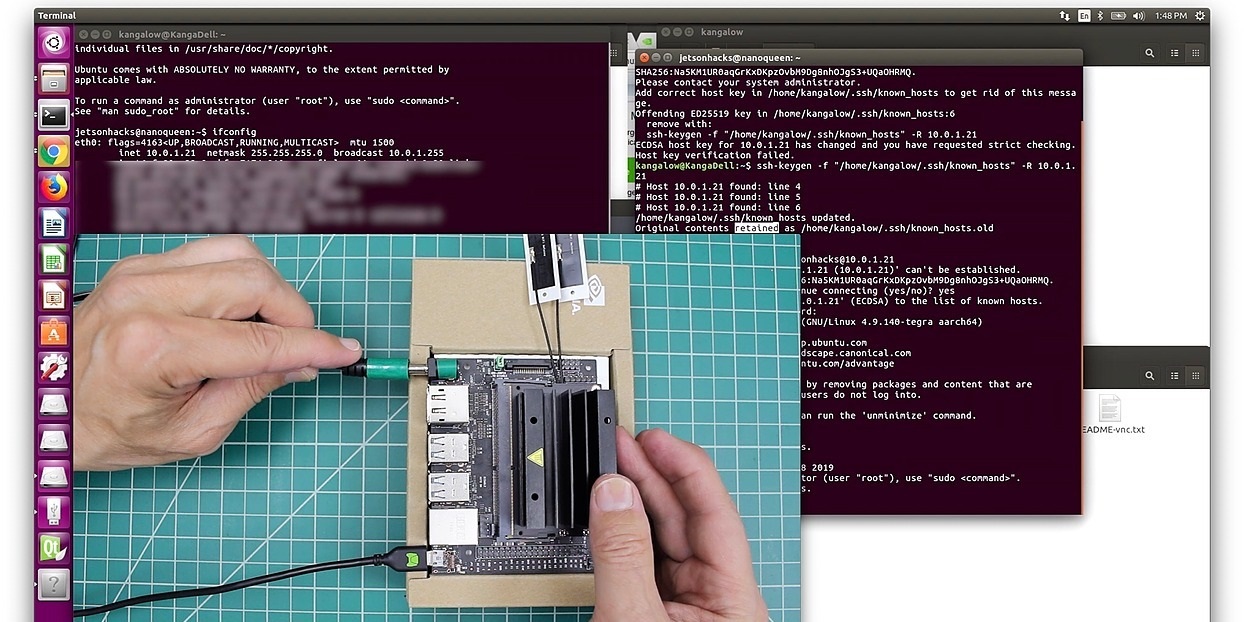
There are fundamental differences between developing general-purpose software applications and making software for embedded systems. Embedded systems software runs on resource-constrained hardware, in contrast to general-purpose server or client applications that run on more capable hardware. For this reason, embedded system software is n
Hello Ubuntu Server The purpose of this communication is to provide a status update and highlights for any interesting subjects from the Ubuntu Server Team. If you would like to reach the server team, you can find us at the #ubuntu-server channel on Freenode. Alternatively, you can sign up and use the Ubuntu Server Team

Ansible vs Terraform vs Juju vs Chef vs SaltStack vs Puppet vs CloudFormation – there are so many tools available out there. What are these tools? Do I need all of them? Are they competing with each other or cooperating? The answer is not really straightforward. It usually depends on your needs and the particular

We are so excited about what just happened that we felt we should tell everyone about it! A group of 24 of us at Canonical from various teams including Sales, HR and Engineering, attended the Grace Hopper Celebration in Orlando, Florida. This year, it was an epic gathering of more than 26,000 people from all
This was a fairly busy two weeks for the Web & design team at Canonical. This cycle we had two sprints. The first was a web performance workshop run by the amazing Harry Roberts. It was a whirlwind two days where we learned a lot about networking, browsers, font loading and more. We also spent

The Ultimate Learning Machine – Babies… This article dives into how machines are trained and their motivation for learning compared to a human baby. Guess what… babies learn faster, require less data and have a power that machines don’t – curiosity! The AI lab at UC Berkeley is trying to innovate with AI to mimic

Adoption of edge computing is taking hold as organisations realise the need for highly distributed applications, services and data at the extremes of a network. Whereas data historically travelled back to a centralised location, data processing can now occur locally allowing for real-time analytics, improved connectivity, reduced latency
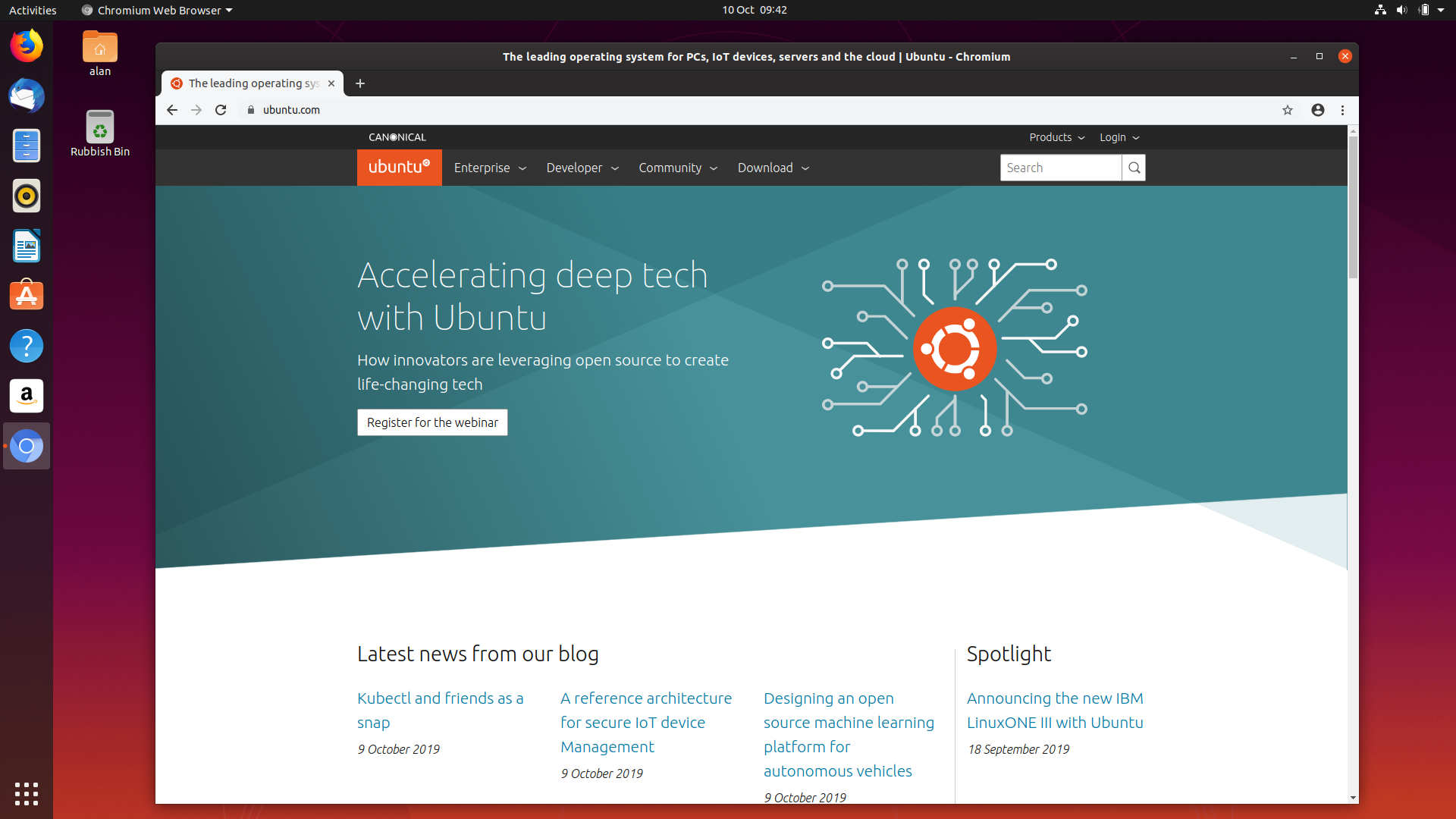
We have recently announced that we are transitioning the Chromium deb package to the snap in Ubuntu 19.10. Such a transition is not trivial, and there have been many constructive discussions around it, so here we are summarising why we are doing this, how, and the timeline. Why Chromium is a very popular web browser,

Newsletter signup
At Canonical, we build solutions to simplify the lives of our users. We want to reduce complexity, costs, and barriers to entry. When we built the Canonical Distribution of Kubernetes (CDK) and MicroK8s, we made sure it aligned with our mission. We built snaps like kubectl for various Kubernetes clients and services to ensure a
When it comes to IoT device management, the core challenge is the following: how to implement a solution that is both secure and perfectly suited to the intended use case?

Self-driving cars are one of the most notable technology breakthroughs of recent years. The progress that has been made from the DARPA challenges in the early 2000s to Waymo’s commercial tests is astounding. Despite this rapid progress, much still needs to be done to reach full autonomy without humans in the loop – an objective

The Ubuntu robotics team presents, The State of Robotics. A monthly blog series that will round up exciting news in robotics, discuss projects using ROS, and showcase developments made by the Ubuntu robotics team and community. Every day, people make contributions to the world of robotics. And every day, work goes unnoticed that could cha

Container orchestration solutions such as Kubernetes allow development teams to be quick and agile with their software deployments. “One of the main features of Kubernetes is the ability to reduce the deployment of version piece of software down to a simple image tag which can be applied at the end of a command.” – said

IoT workloads are moving from central clouds to the edge, for reasons pertaining to latency, privacy, autonomy, and economics. However, workloads spread over several nodes at the edge are tedious to manage. Although Kubernetes is mostly used in the context of cloud-native web applications, it could be leveraged for managing IoT workloads

How NASA uses Machine Learning – If you think the Earth is the only planet with Machine Learning you were wrong. The Mars Rover learning its path and environment at Mars? The healthcare needs for future astronauts? Planet exploration and discovery? Robotic astronaut!? All of these are questions NASA is experimenting and researching with M
We at Canonical have been hard at work on the security features of version 2 of the Robot Operating System (ROS 2). However, if we lift our collective heads up out of the weeds it’s easy to see folks completely misunderstanding how security works today in ROS 2. We’ve written some design articles to help
Ubuntu tech blog
Deep dives for developers
Visit the Ubuntu Tech Blog for deep dives into product features, step-by-step tutorials, and the latest updates from Canonical's engineering teams.