1. Blog
  2. Article

Canonical
on 11 March 2015
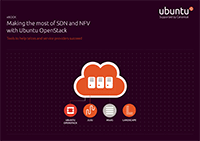
NFV and SDN on OpenStack for network operators


Network Functions Virtualisation (NFV) and Software-Defined Networking (SDN) are two of the hottest infrastructure technologies around, particularly for telecoms and network operators wanting to map their services in a more efficient, scalable, and cost-effective way.

One of the biggest areas of interest for operators as they look to integrate those technologies is to have a quick and easy way to deploy and map them onto cloud infrastructure, particularly OpenStack. This whitepaper gives an overview of the ever-changing infrastructure landscape for network operators, and the challenges they face when implementing NFV and SDN technologies.

The eBook also presents a reference architecture for integrating NFV and SDN technologies onto Ubuntu OpenStack clouds, allowing for maximum flexibility in configuration, management, and scaling.
Download eBook

Related posts


David Beamonte
14 July 2026

MAAS installation: bare metal provisioning is easier than ever

MAAS Ubuntu tech blog

MAAS brings cloud-like automation to physical servers. It helps teams discover, commission, deploy, and repurpose machines from a central control plane, turning bare metal into a programmable resource. But to experience that value, users first need to get MAAS up and running. That path is now cleaner and easier to follow. We’ve created ne ...


seth-arnold
11 July 2026

Januscape vulnerability CVE-2026-53359 mitigations available

Ubuntu Article

Introduction A local privilege escalation (LPE) vulnerability affecting the Linux kernel was publicly disclosed on July 6, 2026. The vulnerability was assigned CVE ID CVE-2026-53359 and is referred to as Januscape. This vulnerability affects all Ubuntu releases. Neither NVD nor Kernel.org have published their own CVSS scores for this issu ...


David Beamonte
9 July 2026

Managing Ubuntu on bare metal at scale

MAAS Ubuntu tech blog

Modern infrastructure teams are expected to deliver cloud-like speed, consistency, and reliability, even when their workloads run on physical servers. Bare metal remains essential for many environments: private clouds, Kubernetes clusters, AI infrastructure, edge sites, regulated platforms, and large Ubuntu estates. But operating physical ...